

You might be interested
Explore more courses that complement your learning journey.
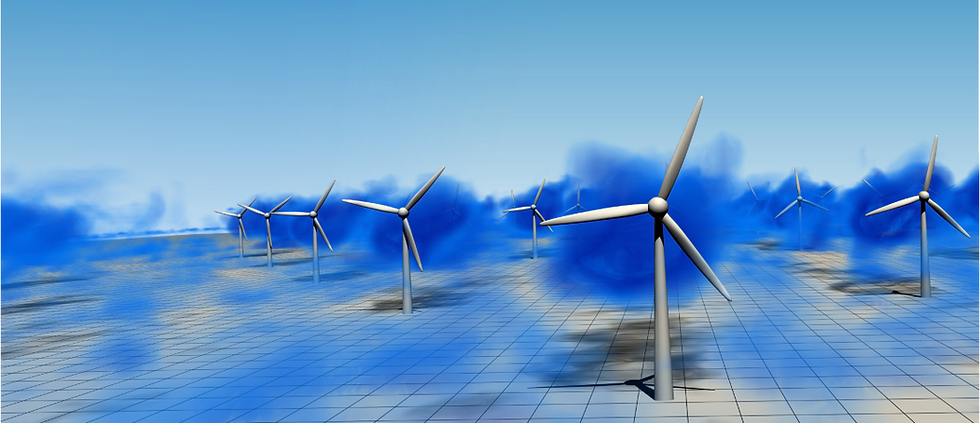
Dimensional Reduction Methods for Analysis and Modelling of Atmospheric and Wind Farm Flows
Duration
5h
Price
700dkk

Lightning Detection, Analysis, and Protection in Wind Energy
Duration
12h
Price
1300dkk

Model-based estimation of remaining useful life
Duration
9h
Price
980dkk
Course Highlights
Here are the key highlights of the program, designed to give you a clear picture of what sets this course apart and how it can strengthen your expertise in wind energy.
Industry best practices
Apply internationally recognized standards and guidelines to design reliable measurement campaigns.
Real world application
Gain relevant knowledge of wind measurement techniques that can be applied directly to wind resource assessment projects.
Data Quality & Analysis
Learn how to acquire, manage, and analyze wind measurement data to ensure reliable measurements.
Uncertainty evaluation
Understand the concepts used for measurement uncertainty evaluation and learn how to quantify wind speed-related uncertainties.
Swipe left to see more

After this course, you can
Identify the governing standards and guidelines for wind measurements, and explain when they are relevant.
List the most common in-situ and remote sensors used for wind measurements, explain their working principles and compare their strengths and limitations in order to evaluate and select suitable technologies for a given wind resource assessment context.
Perform wind data analysis and quality control, calculate vector/scalar, wind direction and other statistics, and estimate fundamental flow parameters, such as flow tilt and turbulence intensity.
Describe the purpose and features of a wind resource Data Acquisition System (DAS).
Apply calibration functions on raw measured data to obtain physical data.
Estimate the uncertainty of a mast-mounted cup anemometer.
About the Course
Do you want to gain confidence in planning and executing wind measurement campaigns and analysing wind data for wind resource assessment? This course will help you understand the importance of reliable wind measurements in wind resource assessment and introduce you to relevant governing guidelines and international standards. You will learn best practices for selecting and deploying both in situ (meteorological mast-based) and remote-sensing wind measurement technologies for different applications and site conditions. You will also develop the skills to address data quality assurance and control, data acquisition, data management, and the quantification of measurement uncertainty.
Join this course to develop the expertise needed to design, evaluate, and manage wind measurement campaigns for wind resource assessment in accordance with internationally recognised standards and guidelines.
Who is this course for?
Any person involved in wind measurements, wind resource assessment, wind farm planning and design.
You might be interested
Explore more courses that complement your learning journey.


Pre-register here
For course-specific questions or if you are looking for a customised training solution for your company, please contact us at courses@windenergy.dtu.dk.
Meet your teacher
Learn from world-class researchers and passionate educators who bring cutting-edge expertise and hands-on experience into the classroom.


Gunhild Thorsen
Senior Development Engineer
Development engineer specializing in wind energy measurements. Her work focuses on lidar and mast measurements, including field campaign planning, measurement setup, and data analysis. She has teaching experience from both online and on-campus courses in measurement techniques.

Mathieu Pellé
Development Engineer
Engineer with background in aerospace and wind energy. Now working at DTU Wind and Energy systems with a wide range of measurements from meteorological masts, remote sensors and wind turbines. Experience teaching in various master and PhD courses about measurement techniques in wind energy and in particular lidars.

Vasiliki Mallini
Development Engineer
Development engineer specializing in wind measurements and wind turbine performance. Currently working at the Technical University of Denmark, she leads power performance campaigns for prototype wind turbines in Denmark.With a background in Environmental Engineering and an MSc in Wind Energy...

Swipe left to see more
The course runs over 6 weeks from October, 29 to December, 10, with one module for each week.
Participants should expect an average time commitment of 5 hours per week, including:
-
Self-paced study (videos, readings and exercises/quizzes)
-
Weekly live sessions for discussion and clarification
Live sessions will take place on the following dates at 10:00–11:00 and 15:00–16:00 CET, covering the same content:
-
November 5, 2026
-
November 13, 2026
-
November 19, 2026
-
November 26, 2026
-
December 03, 2026
-
December 10, 2026
Each week is structured around a balanced mix of self-paced learning and live interactive sessions, allowing participants to combine flexibility with guided teaching from expert teachers. Self-paced activities such as video lectures, readings, exercises and quizzes can be completed at a time that suits your schedule, while weekly live sessions are scheduled at fixed times to support hands-on learning, discussion, and collaboration. The last live session will be focused on the case-study and will mark the official end of the course. Participants will need to conclude and submit their case-study by December, 16.
The course is designed to be flexible, allowing participants to engage with learning materials at their own pace and according to their schedule. All core content remains available throughout the course, enabling participants to revisit materials as needed.
-
1. All study material and lectures are in English.
2. The recommended participant profile is an engineer, meteorologist, or another professional with mathematics and programming skills equivalent to B.Sc. or B.Eng. level or higher.
3. Familiarity with any spreadsheet tool (for example, Excel) or a programming language.
4. Statistics: Understanding of mean, standard deviation and basic regression concepts.
5. Wind energy: Familiarity with wind measurement and wind resource assessment concepts.
The course is delivered online in a structured format, combining self-paced study with weekly interactive live sessions to support flexible and engaging learning.
Self-paced learning includes:
-
Video lectures introducing key concepts and methods,
-
Curated reading material,
-
Practical exercises designed to be solvable using basic data analysis tools, such as Excel, and quizzes for hands-on learning. No programming skills are required, students may use any programming language/software tool of their choice.
Interactive live sessions focus on:
-
Walkthroughs and discussion of exercises and results,
-
Q&A and exchange of practical experiences.
To accommodate a global participant audience, each live session is offered in two time slots covering the same content:
First session: 10:00 CET (serving participants in Asia–Pacific, Europe, and Africa)
Second session: 15:00 CET (serving participants in Europe and the Americas)
All core learning materials are available online throughout the course, enabling participants to revisit content and learn at their own pace and time. Communication and course support are facilitated on the learning platform, fostering ongoing dialogue between participants and teachers.
-
Assessment of the achieved learning objectives will be based on a capstone (case-study) project.
Participants who successfully complete the course will receive a Certificate of Achievement from DTU and will be awarded a 2.5 ECTS micro-credential from DTU.
Key Information


Mohit Sharma
Senior Vice Presiden at Marubeni Corporation
Singapore
“Solid and comprehensive overview!”
"For anyone considering a career transition, this course offers a solid and comprehensive overview of wind energy. It equips you with the essential knowledge and skills needed to smoothly transition into the wind energy field."
Sophie Yin
Renewables Engineer, Woodside Energy
Australia
“Flexible learning with outstanding support!”
“What I enjoy the most about the programme is the flexibility. I have been able to access the content around other aspects of my life, which has been very valuable. Also, the lecturers have made them available to the students online to answer questions and actually provide knowledge beyond the course, which I really enjoyed.”
Fahd Outailleur
Head of Engineering at Enel Green Power
Morocco
“Europe’s leader in wind energy”
“I chose to enrol in this wind energy master's program because DTU is the leading technical university in Europe, renowned for its specialization in wind energy. The program reflects the state of the art of the sector. Before joining, I knew some of their software programmes like WAsP and the Global Wind Atlas. So I was confident about the quality of the training.”
Testimonials
Discover what DTU students have to say about their journey, their experiences, and the skills they’ve gained.
Swipe left to see more
Register now
For course-specific questions or if you are looking for a customised training solution for your company, please contact us at courses@windenergy.dtu.dk.
Register here :)
For course-specific questions or if you are looking for a customised training solution for your company, please contact us at courses@windenergy.dtu.dk.
Financing Options
We offer a range of discounts and packages to make the programme more accessible.
Early Bird Discount
Save
20%
Save 20%
Bring a Colleague
Sign up together with a colleague and you’ll both receive
10%
Off
Invite your friends
Team-Based Learning
Enroll a group of 3 or more participants from the same company and benefit from special team pricing.
Boost collaboration and apply knowledge directly in your workplace.
Join with your team
Course Modules
This course is designed around five thematic modules, with one key theme covered each week.
1.
Introduction to wind resource assessment and to governing standards and guidelines
2.
Wind measurements: In-situ and remote sensors
3.
Wind measurements: Layout and wind data quality control
4.
Data acquisition systems & Data management
5.
Measurement and wind speed uncertainties