



About the Course
Unlock the power of scientific programming to advance wind resource assessment. This course equips participants with practical skills in Python and its scientific ecosystem—including NumPy, pandas, xarray, and geopandas—as well as QGIS for geospatial data handling. You’ll learn to perform robust numerical wind resource assessments using specialised tools like Windkit and PyWAsP, gaining hands-on experience in processing, analysing, and visualising wind data.

After this course, you can
Develop and apply scientific programming techniques tailored to wind resource assessment.
Use Python and QGIS to process and interpret reanalysis, terrain, and wind measurement datasets.
Perform advanced numerical analyses with Windkit and PyWAsP to evaluate wind resources and support wind energy project development.
Build a comprehensive understanding of the methodologies, data sources, and best practices fundamental to modern wind resource assessment.
Ideal for programmers and engineers eager to bridge the gap between software development and renewable energy analytics, this course provides the tools and knowledge needed to contribute effectively to wind energy projects.
4 - 22 May 2026, 3 weeks, online, part-time
Python skills:
Ability to write functions and loops, familiarity with basic data structures (lists, dictionaries), experience with Jupyter notebooks.
Recommended Python knowledge:
Basic numpy array operations, pandas DataFrames (reading CSV, filtering, grouping). If unfamiliar, complete a basic numpy/pandas tutorial before the course.
Statistics:
Understanding of mean, standard deviation, distributions (especially Weibull), and basic regression concepts.
Wind energy:
Basic familiarity with wind resource assessment concepts (what a wind climate is, what AEP means, why we model wakes).
Self-assessment:
-
Python: Can you write a function that reads a CSV and computes the mean of a column? Can you index a pandas DataFrame by date range? If not, review the Python prerequisites below.
-
Wind energy: Do you know what a Weibull distribution is? Can you explain why AEP estimates include uncertainty? If not, review the Wind Energy Fundamentals below.
Platform requirements (IMPORTANT):
This course requires Windows 11 or Linux on x86 architecture. PyWAsP licensing does not support macOS or ARM processors natively.
Mac/ARM users:
You can participate using one of these workarounds, but expect additional setup time:
-
Run a Windows or Linux x86 VM (e.g., Parallels, UTM, VMware)
-
Use a remote Linux server or cloud instance (AWS EC2, Azure VM, etc.)
-
Use WSL2 if you have access to a Windows machine
Please verify your setup works with pywasp before the course starts. We will confirm this during Week 0.
-
Live online sessions:
6 live sessions (two per week), approximately 1.5 hours each. All sessions are recorded. The live sessions focus on Q&A, demonstrations, and collaborative troubleshooting, while the core course content is delivered through self-paced materials.
Flexible time slots:
Each live session is offered in two time slots to accommodate different time zones: morning (9:00 CET) and afternoon (15:00 CET), covering the same content.
Self-paced learning:
Core content is provided through pre-recorded video lessons and prepared Jupyter notebooks, allowing participants to learn at their own pace between live sessions.
Workload:
An expected total workload of 10–15 hours per week, including live sessions and self-study.
Certificate of Attendance for all participants who complete the course.
Micro-credential with ECTS Available for participants who complete and pass an assessed final project.
Review these topics if you need to refresh your knowledge. These are not part of the curriculum but are essential background.
Python Scientific Stack (for wind energy professionals new to Python)
NumPy basics:
Arrays, broadcasting, computation. Review if unfamiliar with np.array, indexing, and vectorized operations.
Pandas basics:
Data tables, indexing, grouping, resampling. Review if unfamiliar with pd.DataFrame, groupby(), and time series indexing.
Xarray basics (CRITICAL):
Dimensions, coordinates, Datasets, DataArrays, subsetting, computation. Windkit is built entirely on xarray—if you are unfamiliar with xarray, this is your most important prerequisite. You should be comfortable with:
Warning: If you skip this prerequisite, Week 1 will be extremely difficult. Complete the Xarray Tutorial before Week 1. Budget 4-6 hours if xarray is new to you.
-
Creating and indexing DataArrays and Datasets
-
Using .sel() and .isel() for label-based and integer-based selection
-
Understanding dimensions, coordinates, and attributes
-
Basic operations like .mean(), .sum() along dimensions
-
Loading and saving NetCDF files
Plotting in Python:
Matplotlib fundamentals, cartopy for map projections. Review if unfamiliar with plt.plot(), subplots, and basic cartographic visualization.
Jupyter Notebooks:
Notebook structure, markdown cells, code cells, running code, visualizing outputs. The course uses notebooks extensively.
Recommended resources:
Wind Energy Fundamentals (for programmers new to wind energy)
How wind turbines work:
Basic aerodynamics, power extraction, the Betz limit. Understand what a power curve represents.
Wind resource assessment overview:
Why we measure wind, what bankability means, the role of uncertainty in project finance.
Wind statistics:
The Weibull distribution and why it models wind speeds well. Wind roses and directional analysis.
Wake effects:
Why turbines in a wind farm produce less than isolated turbines. Basic wake physics.
Key terminology:
AEP (Annual Energy Production), capacity factor, hub height, met mast, lidar, mesoscale vs. microscale.
Recommended resources:
-
DTU Wind Energy E-Learning: Wind Energy Introduction (Coursera, free to audit)
-
Wind Energy (Järvinen, M. et al.) – Wind energy fundamentals
-
Global Wind Atlas – Explore to understand wind resource mapping
-
Key Information
Meet your teachers
Learn from world-class researchers and passionate educators who bring cutting-edge expertise and hands-on experience into the classroom.


Rogier Ralph Floors
Senior Researcher
Rogier Ralph Floors is a Senior Researcher in the Department of Wind and Energy Systems at DTU, specialising in resource assessment and meteorology. With a strong background in wind energy systems, he has an extensive publication record in peer-reviewed journals and is recognised for his expertise in...
Mohit Sharma
Senior Vice Presiden at Marubeni Corporation
Singapore
“Solid and comprehensive overview!”
"For anyone considering a career transition, this course offers a solid and comprehensive overview of wind energy. It equips you with the essential knowledge and skills needed to smoothly transition into the wind energy field."
Sophie Yin
Renewables Engineer, Woodside Energy
Australia
“Flexible learning with outstanding support!”
“What I enjoy the most about the programme is the flexibility. I have been able to access the content around other aspects of my life, which has been very valuable. Also, the lecturers have made them available to the students online to answer questions and actually provide knowledge beyond the course, which I really enjoyed.”
Fahd Outailleur
Head of Engineering at Enel Green Power
Morocco
“Europe’s leader in wind energy”
“I chose to enrol in this wind energy master's program because DTU is the leading technical university in Europe, renowned for its specialization in wind energy. The program reflects the state of the art of the sector. Before joining, I knew some of their software programmes like WAsP and the Global Wind Atlas. So I was confident about the quality of the training.”
Testimonials
Discover what DTU students have to say about their journey, their experiences, and the skills they’ve gained.
Swipe left to see more
Financing Options
We offer a range of discounts and packages to make the programme more accessible.
Early Bird Discount
Save
20%
Save 20%
Bring a Colleague
Sign up together with a colleague and you’ll both receive
10%
Off
Invite your friends
Team-Based Learning
Enroll a group of 3 or more participants from the same company and benefit from special team pricing.
Boost collaboration and apply knowledge directly in your workplace.
Join with your team
You might be interested
Explore more courses that complement your learning journey.
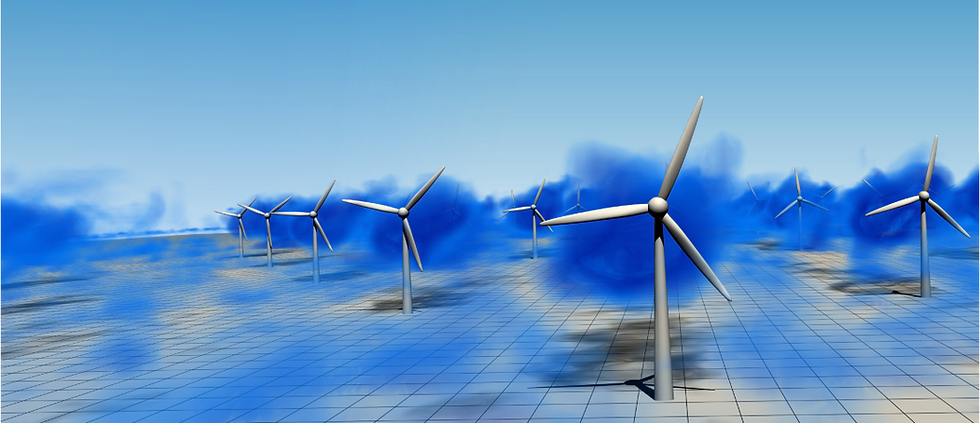
Dimensional Reduction Methods for Analysis and Modelling of Atmospheric and Wind Farm Flows
Duration
5h
Price
700dkk

Lightning Detection, Analysis, and Protection in Wind Energy
Duration
12h
Price
1300dkk

Model-based estimation of remaining useful life
Duration
9h
Price
980dkk
You might be interested
Explore more courses that complement your learning journey.


Swipe left to see more
Pre-register here
For course-specific questions or if you are looking for a customised training solution for your company, please contact us at courses@windenergy.dtu.dk.
Register here :)
For course-specific questions or if you are looking for a customised training solution for your company, please contact us at courses@windenergy.dtu.dk.