



Course Highlights
Here are the key highlights of the program, designed to give you a clear picture of what sets this course apart and how it can strengthen your expertise in wind energy.
Hands-on learning
Apply methods to realistic atmospheric and wind farm flow datasets relevant to industry.
From fundamentals to modern methods
Progress from classical dimension reduction techniques to machine learning approaches in one coherent framework.
Physics-based understanding
Learn to interpret results physically rather than relying on black-box models.
Industry-relevant skills
Gain tools that are increasingly in demand across the wind energy sector.
Accessible and flexible
Suitable for MSc students, PhDs, and professionals with a background in fluid mechanics and basic programming.
Swipe left to see more
Meet your teacher
Learn from world-class researchers and passionate educators who bring cutting-edge expertise and hands-on experience into the classroom.

Søren Juhl Andersen
Associate Professor
Søren’s research focuses on high-fidelity computational fluid dynamics of atmospheric and wind farm flows, with particular emphasis on physical interpretation and reduced‑order modeling. He has participated in several international projects, including WakeBench, JAM, MERIDIONAL, and TotalControl, and has extensive teaching experience at all academic levels.
Mohit Sharma
Senior Vice Presiden at Marubeni Corporation
Singapore
“Solid and comprehensive overview!”
"For anyone considering a career transition, this course offers a solid and comprehensive overview of wind energy. It equips you with the essential knowledge and skills needed to smoothly transition into the wind energy field."
Sophie Yin
Renewables Engineer, Woodside Energy
Australia
“Flexible learning with outstanding support!”
“What I enjoy the most about the programme is the flexibility. I have been able to access the content around other aspects of my life, which has been very valuable. Also, the lecturers have made them available to the students online to answer questions and actually provide knowledge beyond the course, which I really enjoyed.”
Fahd Outailleur
Head of Engineering at Enel Green Power
Morocco
“Europe’s leader in wind energy”
“I chose to enrol in this wind energy master's program because DTU is the leading technical university in Europe, renowned for its specialization in wind energy. The program reflects the state of the art of the sector. Before joining, I knew some of their software programmes like WAsP and the Global Wind Atlas. So I was confident about the quality of the training.”
Testimonials
Discover what DTU students have to say about their journey, their experiences, and the skills they’ve gained.
Swipe left to see more

After this course, you can
Structure, process, and analysis of large flow datasets efficiently
Apply decomposition methods such as Fourier analysis, POD, and autoencoders to turbulent flow data
Develop reduced-order models for fast and accurate flow modeling
Interpret data-driven results and connect them to physical flow behavior
Critically evaluate the strengths and limitations of different methods and select the appropriate one for a given problem
Understand and analyze the statistical and stochastic nature of turbulent flows
Pre-register here
For course-specific questions or if you are looking for a customised training solution for your company, please contact us at courses@windenergy.dtu.dk.
Course Modules
This course is designed around five thematic modules, with one key theme covered each week.
1.
Introduction to wind resource assessment and to governing standards and guidelines
2.
Wind measurements: In-situ and remote sensors
3.
Wind measurements: Layout and wind data quality control
4.
Data acquisition systems & Data management
5.
Measurement and wind speed uncertainties
You might be interested
Explore more courses that complement your learning journey.
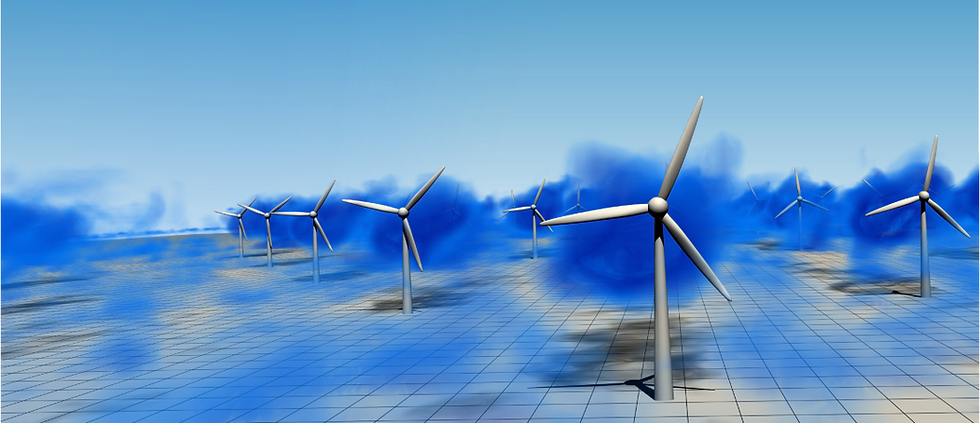
Dimensional Reduction Methods for Analysis and Modelling of Atmospheric and Wind Farm Flows
Duration
5h
Price
700dkk

Lightning Detection, Analysis, and Protection in Wind Energy
Duration
12h
Price
1300dkk

Model-based estimation of remaining useful life
Duration
9h
Price
980dkk
Financing Options
We offer a range of discounts and packages to make the programme more accessible.
Early Bird Discount
Save
20%
Save 20%
Bring a Colleague
Sign up together with a colleague and you’ll both receive
10%
Off
Invite your friends
Team-Based Learning
Enroll a group of 3 or more participants from the same company and benefit from special team pricing.
Boost collaboration and apply knowledge directly in your workplace.
Join with your team
Register here :)
For course-specific questions or if you are looking for a customised training solution for your company, please contact us at courses@windenergy.dtu.dk.
Register now
For course-specific questions or if you are looking for a customised training solution for your company, please contact us at courses@windenergy.dtu.dk.
You might be interested
Explore more courses that complement your learning journey.


About the Course
Atmospheric flows are turbulent, dynamic, and notoriously difficult to model. As the wind energy industry increasingly relies on data-driven approaches, the ability to understand, apply, and critically evaluate these methods has become an essential skill.
This course introduces a powerful family of tools known as dimension reduction methods. These methods make it possible to analyze large datasets and develop fast, accurate reduced-order models. The course progresses from dimensional analysis to Fourier decomposition, Proper Orthogonal Decomposition (POD), and machine learning-based autoencoders.
The focus is not on treating methods as black boxes. Instead, you will learn to understand what they reveal about the physical structure of atmospheric and wind farm flows, and how to use them in practice.
You will work with turbulent flows directly relevant to wind energy, including atmospheric boundary layers, wind farm flows, and wake dynamics. The necessary mathematics are introduced intuitively, enabling you to apply the methods confidently and interpret results meaningfully.
By the end of the course, you will have a solid foundation for understanding and applying modern data-driven modeling approaches in both research and industry.
Who is this course for?
1. Engineering professionals in the wind energy sector looking to deepen their understanding of data-driven methods and apply them confidently in research or industry workflows.
2. MSc and PhD students in engineering or applied science seeking an accessible introduction to dimension reduction and reduced-order modeling.
3. Researchers and academics working with atmospheric or turbulent flow data who want to expand their methodological toolkit beyond traditional approaches.
4. Industry professionals with a background in fluid mechanics or wind energy who feel the gap between state-of-the-art data-driven models and their own ability to interpret and apply them.
The course requires one week of full-time availability, during which the first days are focused on lectures and exercises, and the subsequent days focus on the course’s project. After this week, students will have a few days to finish and hand in their project.
1. Background in wind energy engineering, specifically the fundamentals of wind energy flows, such as wind turbine wakes, wind farm flows, and atmospheric boundary layers.
2. Basic courses in fluid mechanics, linear algebra, and time series analysis.
3. A computer capable of running Python, Jupyter notebooks, or MATLAB
4. Scripting in MATLAB or Python
This course is hybrid (online or on-campus, synchronous only). For participants attending the course on campus, DTU will provide complimentary lunch.
During the first three days, there will be lectures followed by hands-on exercises covering the most important aspects of the data-driven methods in the context of wind turbine flows. Over the following days, the students will focus on a project on a flow of their choice: wind turbine wakes, wind farm flows, or the atmospheric boundary layer. This project provides the opportunity to apply the knowledge from the lectures on realistic flows found in the wind energy industry and requires the physical interpretation of the methods applied rather than relying on black-box models. The coding of the exercises is expected in Python or MATLAB.
Assessment of the achieved learning objectives will be based on the course project, which is defined by the teacher and carried out by the learner on their preferred flow case scenario from three available options.
Participants who successfully complete the course will be awarded with a microcredential from DTU. If the participant prefers, we can give a 2 ECTS microcredential.
[Note that microcredentials with ECTS are not automatically transferable to accredited education programs but are most often transferable to PhD programs. Your study leader would decide if the microcredential with 2 ECTS can be transferred to your programme]